The situation: A customer discovered a critical design error in a custom fluid system. They were on a tight schedule and needed a fast, reliable fix without waiting for entirely new fabricated components.
After reviewing the problem, the most practical and cost-effective route was clear: modify existing custom stainless sanitary T-fittings so they would match the rest of the assembly while still meeting quality and food-grade cleanliness standards.
The Approach
We cut the existing T-fittings in a strategic location, added a short extension, and rewelded the assembly under controlled conditions. Dimensional accuracy, root weld quality, and internal cleanliness were non-negotiable.
1 Strategic Cutting
Each fitting was carefully cut in a planned location on the band saw. This gave us the geometry we needed while preserving as much of the original sanitary surfaces as possible.
After cutting, the faces were ground to the flatness required for a sound, consistent weld joint.
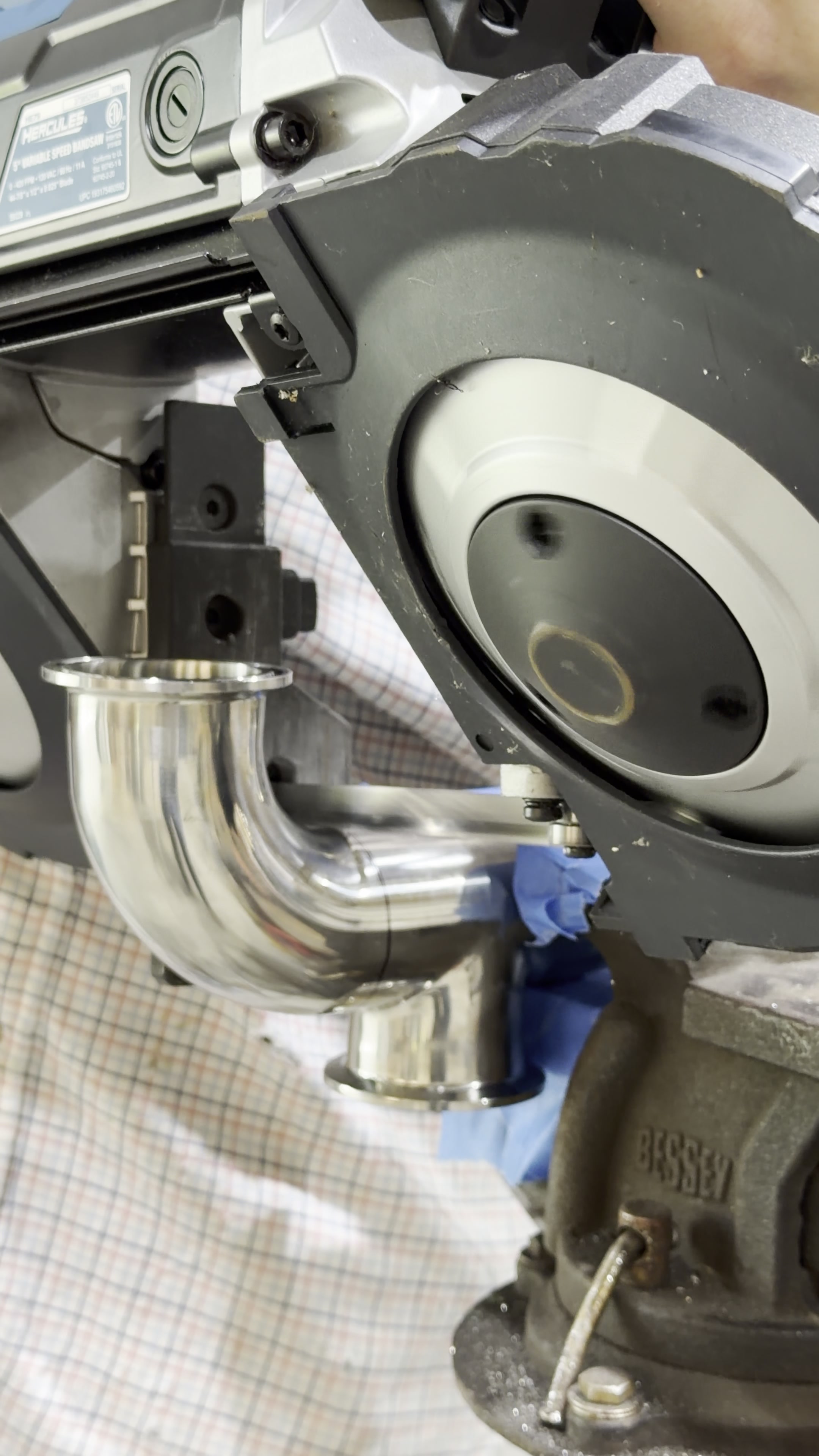
Cutting the stainless T-fitting in a strategic location
2 Fit-Up & Dimensional Control
A short extension piece was tacked in place. The entire weldment was then locked into a custom jig so the final geometry would remain dimensionally correct for fitment onto the customer’s system.
Before welding, the stainless fitting was purged with inert gas. Proper purging protects the root pass and prevents sugaring (oxidation) on the inside of the tube — critical for sanitary and fluid-system service.
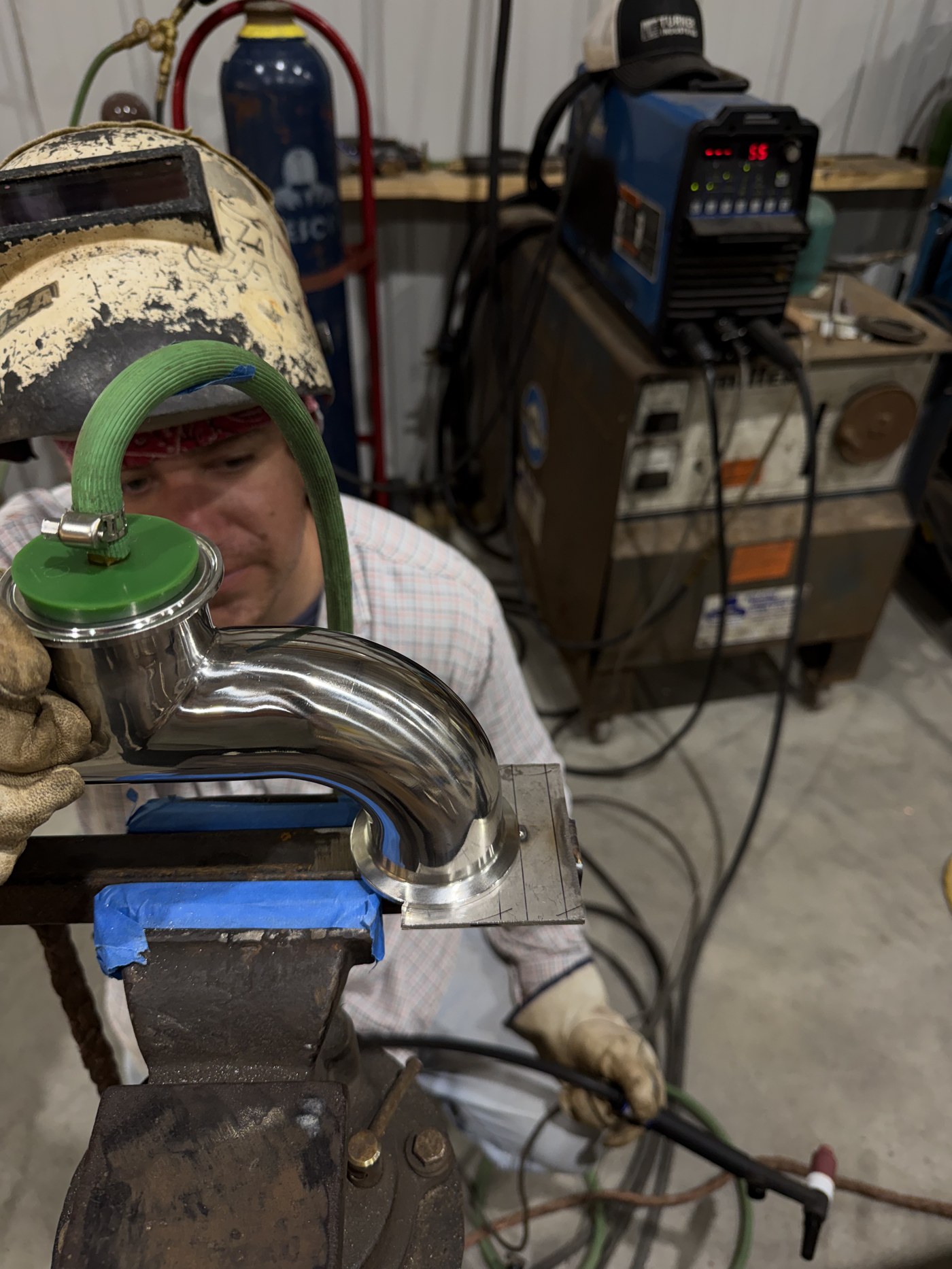
Extension tacked and locked in custom jig with purge setup
3 Controlled GTAW Welding
The joint was welded using GTAW (TIG). Heat input was carefully controlled throughout the process to minimize distortion (weld draw). Periodic quality checks were performed during welding so any issue could be corrected immediately.
Inert gas shielding and the earlier purge kept both the face and root of the weld clean and free of contamination.
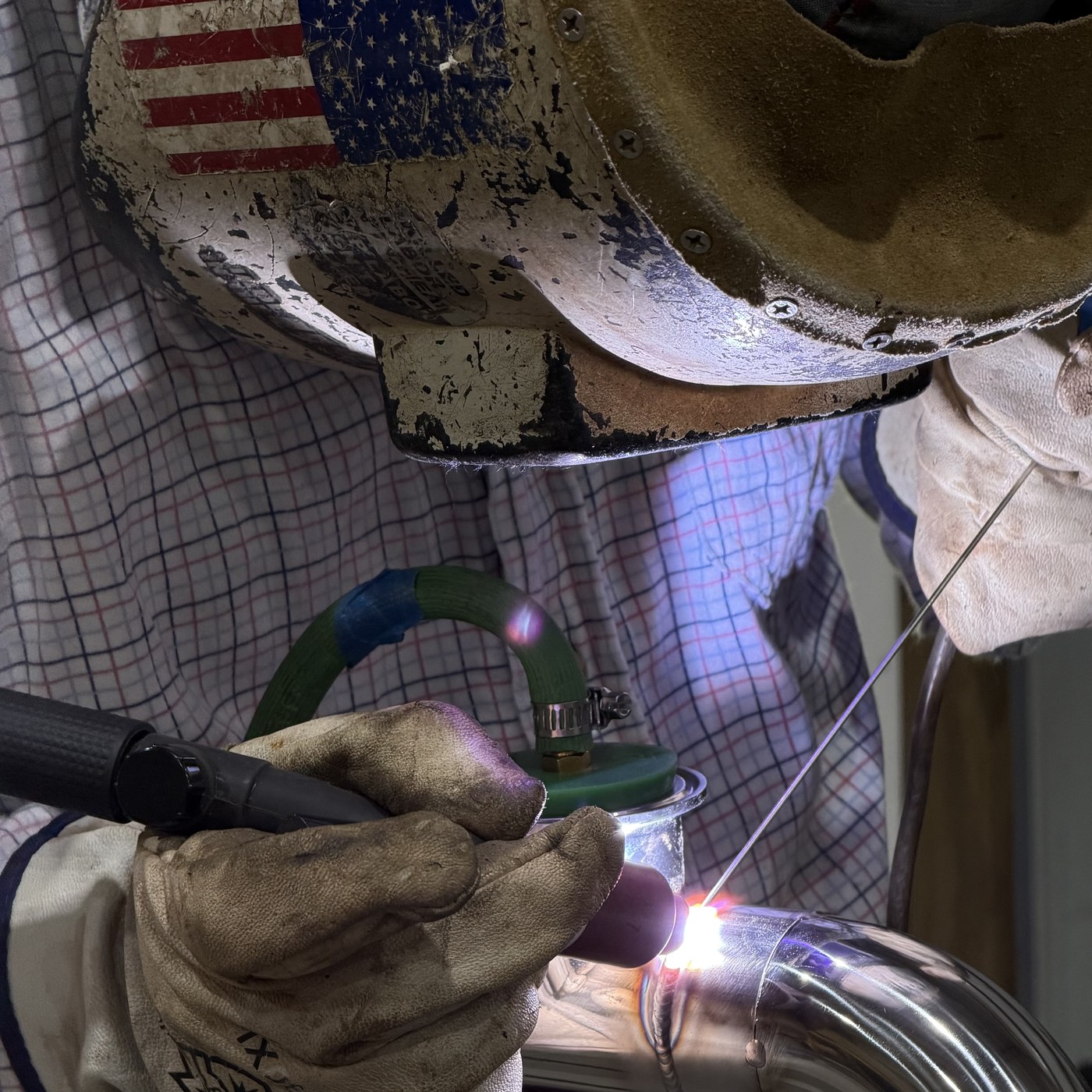
GTAW in progress — controlled heat input and continuous purge
Additional welding footage from the same process:
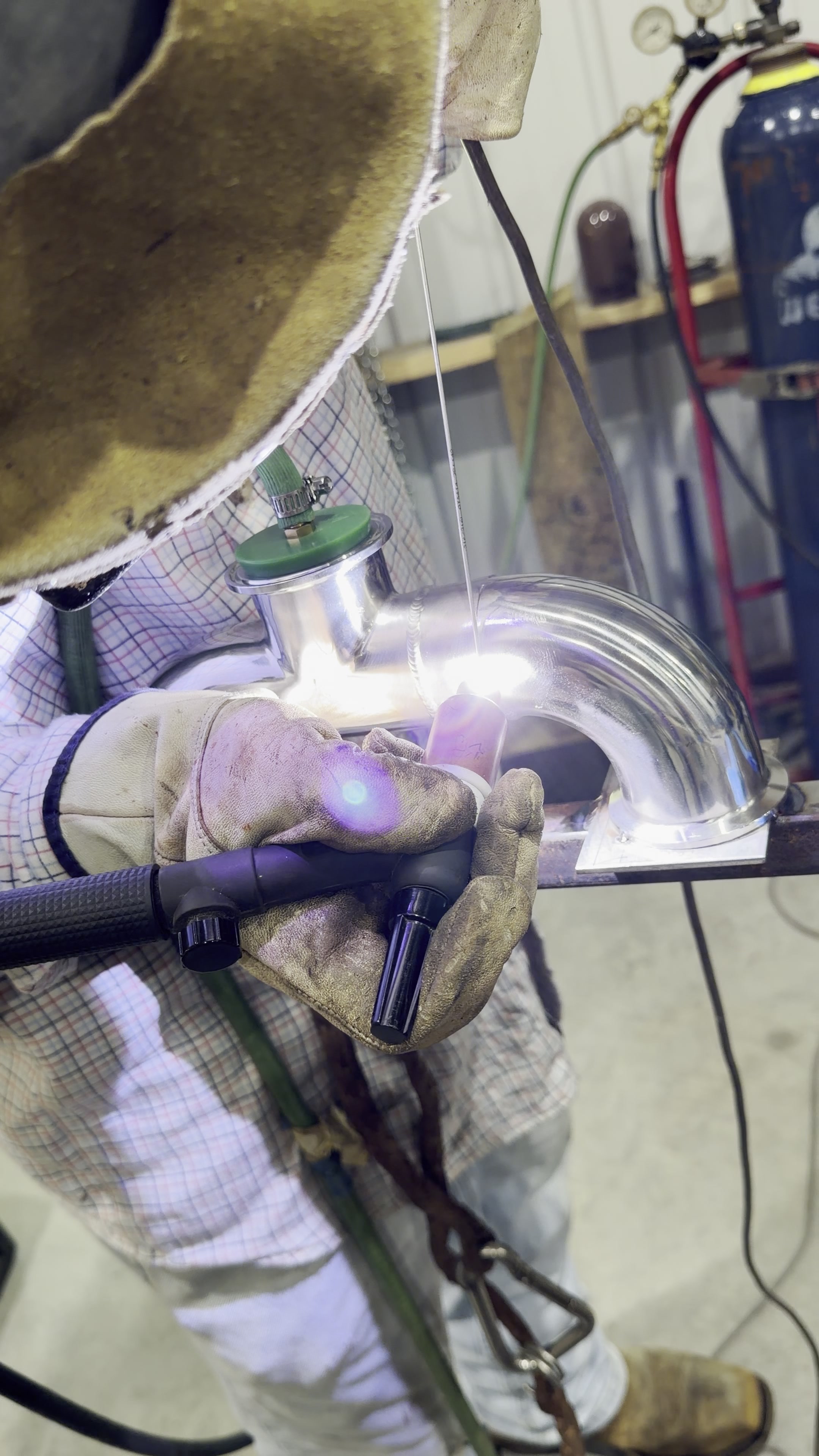
Maintaining consistent travel speed and heat input
4 Final Inspection
The completed pieces were checked for acceptable dimensional conditions. The internal root weld was inspected for quality and cleanliness compliance. Once both dimensional and visual criteria were met, the parts were ready for delivery.
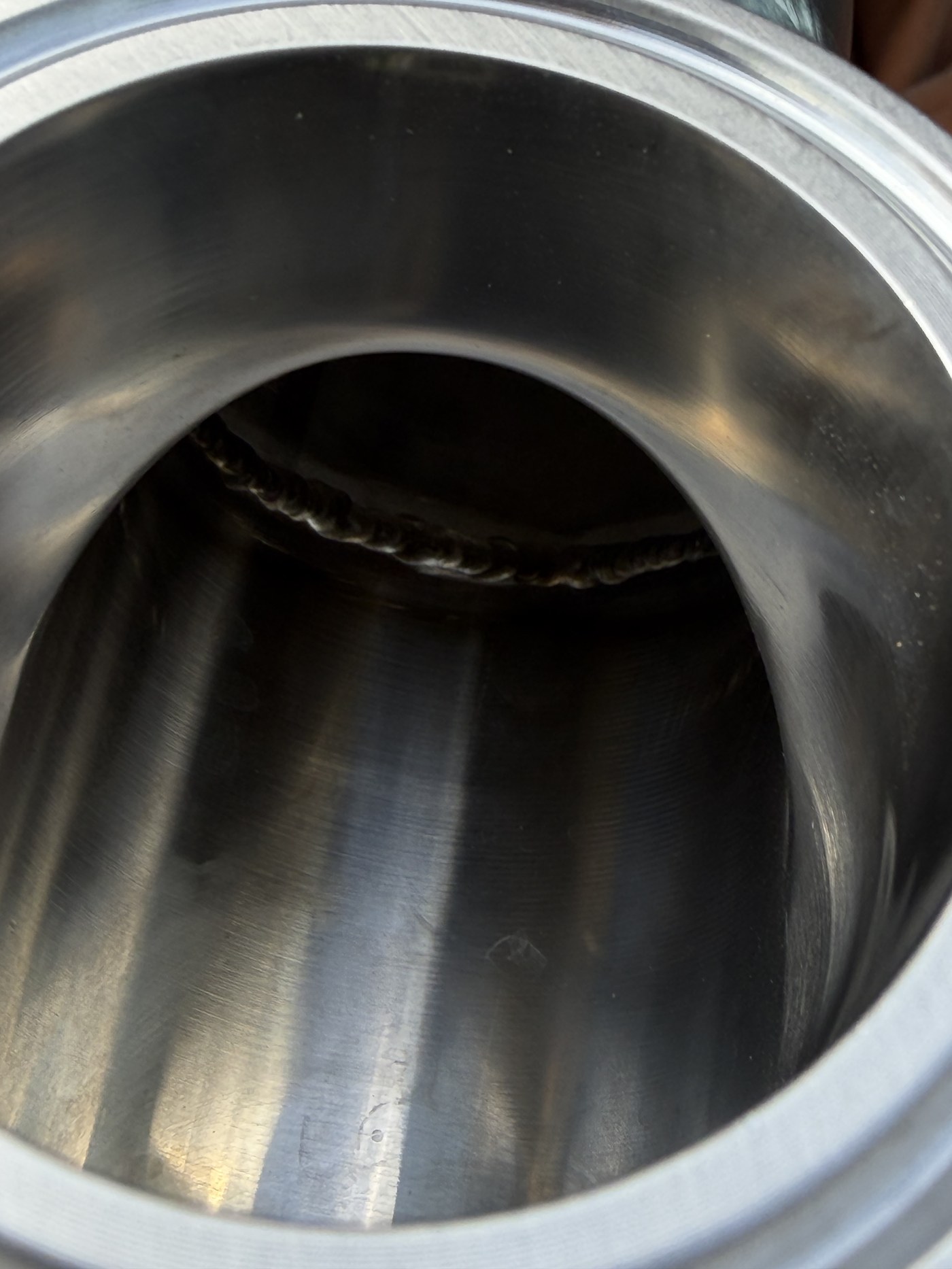
Clean internal root — free of sugaring and ready for service
The Result
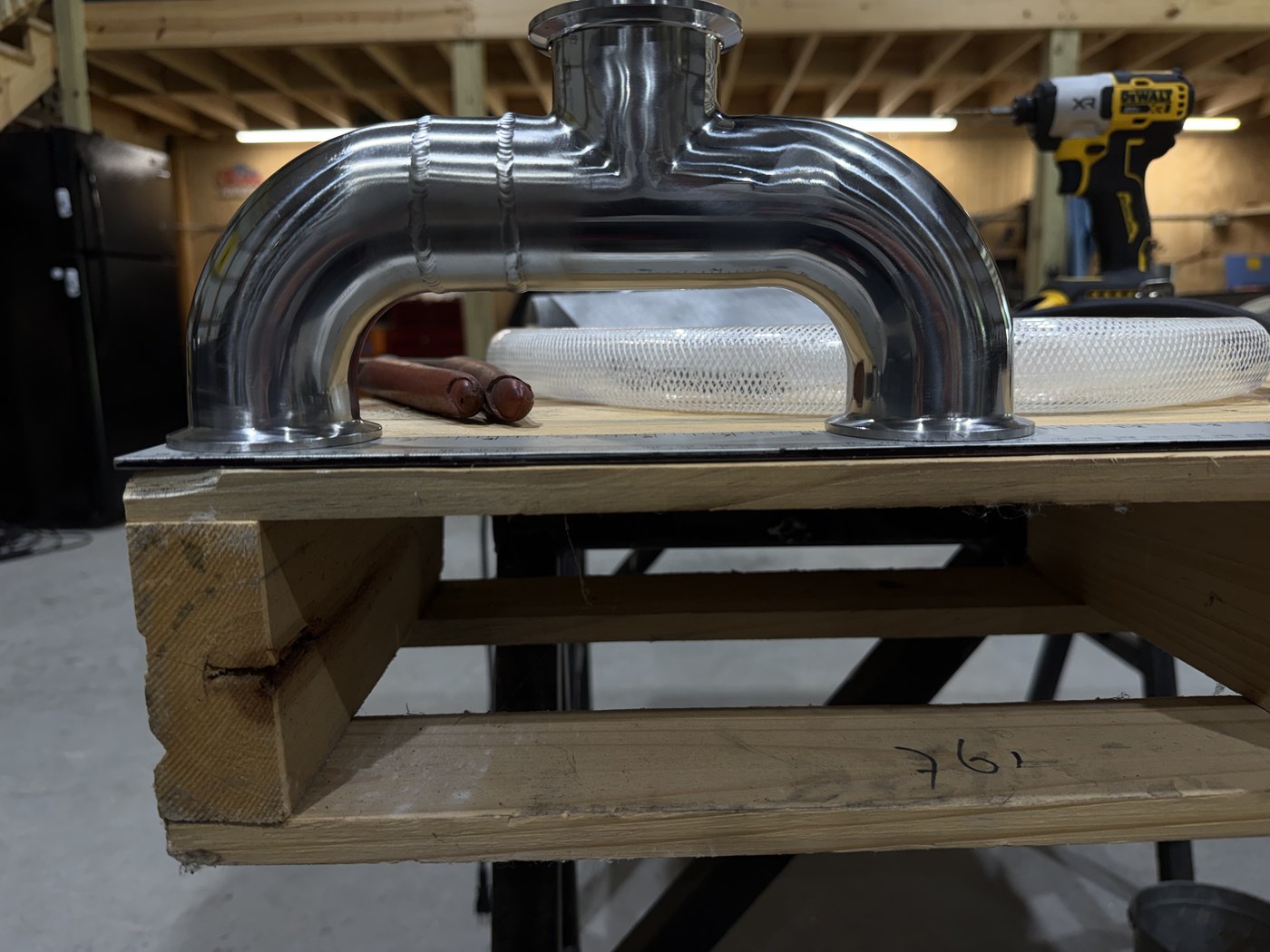
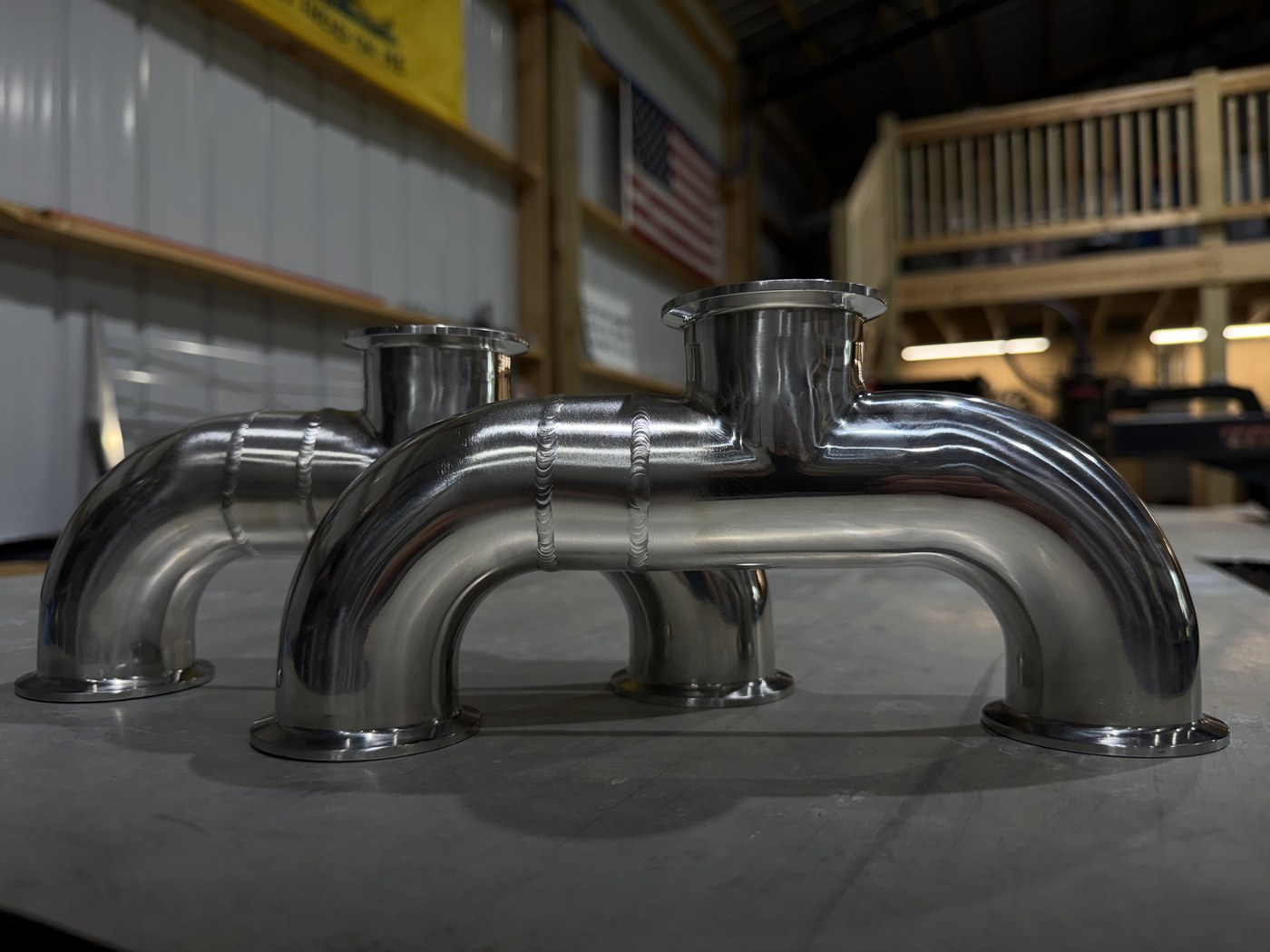
What Was Delivered
Modified stainless sanitary T-fittings that matched the required system geometry, met dimensional requirements, and satisfied internal weld quality and food-grade cleanliness standards — without the long lead time of completely new fabrications.
Have a Design Issue or Tight Deadline?
Send us your welding and fabrication needs. We solve problems like this — critical geometry fixes, specialty alloys, sanitary work, and fast-turn custom pieces — every day.